Wednesday, 31 July 2013

Aetna Touch-N-Go, and the Big Picture

A couple of days ago, we reported on Aetna's apparent change of heart regarding the sale of individual medical insurance here in Ohio. Today, they're back in the news:


There are three essential differences between the Public (FFE) and Private Exchange models:

First, only plans purchased on the Public Exchange will be eligible for subsidies (maybe: the subsidy rules keep changing);

Second, plans available on the Public Exchange are expected to have much smaller ("skinnier," in the vernacular) provider networks;

And third, fewer carriers are expected to participate in the Public Exchanges (limiting competition and choice).

It's that third item that's key: absent a robust marketplace, even subsidized plans are likely to remain out of the financial reach of many folks. That's due partly to premiums, and partly to plan design. The least expensive ObamaTax-compliant plans ("Bronze" level) have potential out-of-pocket maximums much higher than many plans available today, further exacerbating the (un)affordability issue.

If (when?) major players like Aetna take a pass on the Public version in favor of the Private, it will cause an even greater strain on the former's sustainability. The Private Exchange model, on the other hand, looks poised to be reasonably successful: for the most part, these will offer more choice (and thus competition) and better service.

Wait, what's that about service, Henry?

Well, it's like this: agents (you know, the folks who are trained and experienced in the actual business of health insurance) are effectively shut out of the Public Exchanges. But a lot of us have signed up for the Private Exchanges. So when a consumer needs an accurate, knowledgeable and credible answer, to where do you think he will turn?

On the other hand, we know that a lot of agents have already thrown in the towel (and/or are planning to do so in the near future), so that may not be a realistic assessment, either.

Yeah, I'm just full of warm fuzzies today.

Wednesday Potpourri

■ While you're busy planning that end-of-summer trip to Rome or London (or Istanbul, for that matter), you should know that your health insurance works a bit differently overseas. One way to help protect yourself is with a Travel Medical plan.

■ As if the ObamaTax train-wreck wasn't causing enough damage to the health care and insurance sectors, its broad "appeal" has rippled through the whole economy:

"This letter was written by the three of the nation's largest labor unions ... Right now, unless you and the Obama Administration enact an equitable fix, the ACA will shatter not only our hard-earned health benefits, but destroy the foundation of the 40-hour workweek that is the backbone of the American middle class."

Ooops.

■ Earlier this month, the (Evil) Employer Mandate was put (temporarily) on hold. Before we start singing and dancing for joy (Hi, Joy!), though, here's some sobering news. According to the Congressional Budget Office:

"The Obama administration's move to delay a mandate on businesses to provide health coverage will mean $12 billion in lost tax revenue and additional costs ... one million fewer people will get employer coverage in 2014 as a result of the postponement"

So we get higher costs and fewer people insured. Yup, sounds like a plan!

[Hat Tips to Holly R and Gail S]

Rakin' in the ObamaTax Bucks

As Patrick noted last week, the ObamaTax Medical Loss Ratio (MLR) provision seems to have been a wonderful gift to the health insurance industry:

"So, thanks to MLR, insurance companies took in an additional $50 Billion in 2012 and paid out $800 Million less in rebates"

Lest our readers think that this is an exaggeration, we learn today that at least one carrier, WellPoint, is making some serious coin off of the ObamaTax:

"[N]ewly minted CEO Joseph Swedish said the company expects a windfall of sorts from the [ObamaTax] — as much as $20 billion by 2016."

While that's only partially due to the MLR (other factors include increased market share and more folks buying coverage through the Exchanges), it's certainly looks to be "berry, berry good" for the folks at Blue Cross.

By the way, take a look at your renewal and let us know how well you're faring.

Tuesday, 30 July 2013

Insurance as a loss leader

It's often asked how long carriers will put up with low margins and tight regulations. It's not a very attractive market to be in right now. Unless insurance isn't your primary business. If you're a hospital or health system breaking even but driving more business to your facilities would be a good deal. Making an extra couple points on insurance operations would just be gravy.

Even better is having your competitors or taxpayors subsidize any loses while your hospital runs up charges.

On Au

Greg Mankiw has a cool New York Times article and blog post, "On Au" analyzing the case to be made for gold in a portfolio, including a cute problem set. (Picture at left from Greg's website. I need to get Sally painting some gold pictures!)

I think Greg made two basic mistakes in analysis.

First, he assumed that returns (gold, bonds, stocks) are independent over time, so that one-period mean-variance analysis is the appropriate way to look at investments. Such analysis already makes it hard to understand why people hold so many long-term bonds. They don't earn much more than short term bonds, and have a lot more variance. But long-term bonds have a magic property: When the price goes down -- bad return today -- the yield goes up -- better returns tomorrow. Thus, because of their dynamic property (negative autocorrelation), long term bonds are risk free to long term investors even though their short-term mean-variance properties look awful.

Gold likely has a similar profile. Gold prices go up and down in the short run. But relative prices mean-revert in the long run, so the long run risk and short run risk are likely quite different.

Second, deeper, Greg forgot the average investor theorem. The average investor holds the value-weighted portfolio of all assets. And all deviations from market weights are a zero sum game. I can only earn positive alpha if someone else earns negative alpha. That's not a theorem, it's an identity. You should only hold something different than market weights if you are identifiably different than the market average investor. If, for example, you are a tenured professor, then your income stream is less sensitive to stock market fluctuations than other people, and that might bias you toward more stocks.

So, how does Greg analyze the demand for gold, and decide if he should hold more or less than market average weights? With mean-variance analysis. That's an instance of the answer, "I diverge from market weights because I'm smarter and better informed than the average investor." Now Greg surely is smarter than the average investor. But everyone else thinks they're smarter than average, and half of them are deluded.

In any case, Greg isn't smarter because he knows mean-variance analysis. In fact, sadly, the opposite is true. The first problem set you do in any MBA class (well, mine!) makes clear that plugging historical means and variance into a mean-variance optimizer and implementing its portfolio advice is a terrible guide to investing. Practically anything does better. 1/N does better. Means and variances are poorly estimated (Greg, how about a standard error?) and the calculation is quite unstable to inputs.

In any case, Greg shouldn't have phrased the question, "how much gold should I hold according to mean variance analysis, presuming I'm smarter than everyone else and can profit at their expense by looking in this crystal ball?" He should have phrased the question, "how much more or less than the market average should I hold?" And "what makes me different from average to do it?"

That's especially true of a New York Times op-ed, which offers investment advice to everyone. By definition, we can't all hold more or less gold than average! If you offer advice that A should buy, and hold more than average, you need to offer advice that B should sell, and hold less than average.

I don't come down to a substantially different answer though. As Greg points out, gold is a tiny fraction of wealth. So it should be at most a tiny fraction of a portfolio.

There is all this bit about gold, guns, ammo and cans of beans. If you think about gold that way, you're thinking about gold as an out of the money put option on calamitous social disruption, including destruction of the entire financial and monetary system. That might justify a different answer. And it makes a bit of sense why gold prices are up while TIPS indicate little expected inflation. But you don't value such options by one-period means and variances. And you still have to think why this option is more valuable to you than it is to everyone else.

Detroit Loves Obamacare

The folks in the motor city may have Obamacare to thank for providing a way out of their
financial mess.

As Detroit enters the federal bankruptcy process, the city is proposing a controversial plan for paring some of the $5.7 billion it owes in retiree health costs: pushing many of those too young to qualify for Medicare out of city-run coverage and into the new insurance markets that will soon be operating under the Obama health care law.
Officials say the plan would be part of a broader effort to save Detroit tens of millions of dollars in health costs each year, a major element in a restructuring package that must be approved by a bankruptcy judge. It is being watched closely by municipal leaders around the nation, many of whom complain of mounting, unsustainable prices for the health care promised to retired city workers.
NY Times

And they are not alone . . .
Similar proposals that could shift public sector retirees into the new insurance markets, called exchanges, are already being planned or contemplated in places like Chicago; Sheboygan County, Wis.; and Stockton, Calif. While large employers that eliminate health benefits for full-time workers can be penalized under the health care law, retirees are a different matter.
Thank you Obamacare for bailing out cities that have no clue how to manage money.

Lucy (Peanuts fame) found working in Maryland

Lucy would be called an inflation-denier for her never-ending demand that it cost $0.05. Even today hocking life insurance she is set on five cents being the price. I have to wonder if officials in Maryland aren't giving their price setting just as little thought:

"The Maryland Insurance Administration is telling some carriers that want to sell coverage through its individual exchange program to make deep cuts in their premiums. "

"In the bare-bones, “bronze level” of coverage, for example, the monthly premium rates originally requested for a 25-year-old nonsmoker living in Baltimore ranged from $136 to $350.

The rates approved in that category of coverage range from $124 to $237.

The rate reductions demanded range from 1.1 percent for a QHP to be sold by a unit of Kaiser Permanente to 32 percent for a QHP to be sold be a unit of  UnitedHealth Group Inc." [emphasis added]

It is important to remember that if the actuaries for United are wrong they don't get to keep the money, it would go back to the policy holders; thus they don't have any incentive to be that far off.

I have to wonder where $237 came from. That doesn't sound far off for a healthy person policy today with maternity. Guaranteed issue with community rating and $350 even sounds aggressive. 

Gov tries to circumvent ACA in way HHS clearly tells employers not to

How sweet this would be if not for the inevitable consequences:


Like any true Democrat, Rep Waxman doesn't think they should be bothered by any actual law.

Representative Henry A. Waxman, a California Democrat who helped write the 2010 law, said, “The federal government, as our employer, should provide the same contributions it makes to our current health plans.” 

HHS has made it very clear to the rest of us though that we dare not even consider such an arrangement.

"FAQS About Affordable Care Implementation (Part XI)” (FAQ) available here issued by the Departments of Labor, Health and Human Services (HHS), and the Treasury (collectively, the Agencies) on January 24, 2013 sends a clear message to employers that trying to escape ACA or other federal group health plan mandates by replacing their traditional insured or group health plans or policies with health reimbursement arrangements (HRAs) or other arrangements under which the employer agrees to provide a fixed defined contribution to be used to buy or reimburses employees for buying individual health insurance generally won’t pass legal muster.  The FAQ also indicates that employers sponsoring HRAs that only reimburse medical expenses, not individual health insurance premiums also need to review their arrangements to verify that those programs also comply with ACA and other applicable rules." [emphasis added]

It  has been prohibited to use Section 125 unreimbursed medical funds to reimburse insurance premiums. Outside those two mechanisms I'm not aware of any way to reimburse individuals for premiums and not run afoul of any other law. The one exception being giving them a raise and taking the tax it. Would love to see Congress pass out $10,000 raises to everyone and how that would go over.


The Rate Game

Patrick's post yesterday about small group renewal rates seems to have touched a nerve, and I think it's worthwhile spending some time on the whole "early renewal" issue. The premise of early renewal is that some groups may benefit from moving their renewal dates back from (say) early 2014 to late 2013. To that end, carriers have begun offering this service to existing groups.

Yesterday, Anthem sent me a list of my eligible groups, along with what they anticipate will happen to those groups' rates once community rating (and all the rest) kicks in.

As with Patrick's experience, some of my groups would actually see significant rate reductions come next year, while others would see substantial rate hikes. What became immediately obvious is that the "sicker" (and/or older) the group, the better they will fare come January 1. And, of course, the converse is also true.

As a practical matter, then, those sicker/older groups will most likely stay put, since they have nothing to gain from renewing early. But the healthier ones will most likely pull that trigger in an effort to stave off those hefty renewal rates for as long as possible.

And I'm just a very small fish in a very large pond. Imagine this scenario playing out across the country, with many (most?) of the sicker groups staying put, and the healthy ones renewing early. The practical - and obvious - result will be that rates for everyone will skyrocket as carriers seek to find a way to balance these competing forces. It's just not a sustainable model.

One of our commenters also observed, based on his own experience, that "this leads to healthier groups dropping out, and eventually the unhealthy groups are paying even more than they used to." And since the (Evil) Employer Mandate is currently on hiatus, there's really very little that can be done to stop this from happening.

Now, there is one potential reason for those older/sicker groups to take the plunge: Health Savings Accounts (HSAs). That's because, under the ObamaTax, these plans are effectively outlawed (or at least rendered much less effective) after this year. So depending on how important a given group deems its HSA to be, they may well consider keeping it (vs a lower premium) a good trade-off. We shall see.

Monday, 29 July 2013

Death of Small Group Insurance - One Chart

January 1, 2014. Community rating, narrower age banding, guaranteed issue, and other fun parts of the law will begin on this date. In preparation, our agency has been meeting with major health insurance carriers on the impact PPACA will have on our employer sponsored plans with less than 50 employees. For my accounts the results have been staggering:

 
49 employer groups, 4 with decreases of 20%-30%, 4 with 0-10% increases, 20 employers with 30% or more increases. How will businesses absorb/pass on the cost increases? Drop coverage. With no penalties for not offering why wouldn't they?

Flawed thinking on ObamaCare, giving it a shot has consequences

Reading the comments to an article in the NYT on the Obama Admin's implementation of ACA, I came across a very common response:
"Corkyjon it seem to me that you speculate in the negative; the best thing that we can do for ourselves is to let Obama care play itself out. It's meant to work by getting all the uninsured to get coverage or suffer a penalty id they don't, and to offer coverage despite pre-existing conditions, Sounds good . . . will it do what's expected of the program ? that's to be seen"

What I never see mentioned or discussed by these individuals is the consequences or aftereffects of giving it a shot. They make it sound like giving it a shot is a free sample.  That is not in anyway accurate. If it doesn't work we are looking at:
  1. Hundreds of billions (if not trillions) of additional debt.
  2. Individuals being kicked off insurance with no place to go
  3. Employers having exited the market and possibly not willing or able to get back in
  4. Shopping habits and expectations for insurance altered
  5. Carriers having exited the market and possibly never returning
If this fails we just don't pick up where we left off before. The stimulus was a failure, that doesn't mean we don't have to pay the trillion dollar bill. ACA's failure could easily dwarf that. That is why you don't half-ass complete overhauls of major segments of the economy like this. 

The ObamaTax Subsidy Cheat

As we noted almost 2 years ago, the ObamaTax specifically forbids folks in states with Federally-run Exchanges from receiving any subsidies (and this would include those hybrid State/Fed models, as well). Of course, a little thing like the law is of little consequence to the folks in Capital City, and so the IRS has stated unequivocally that "it determined that Congress intended for subsidies to be available in both state- and federally-run marketplaces," thus greatly expanding the scope (and, of course, the cost) of the subsidies.

Now come two House committees (finally) looking into this egregious decision:

"Two House committees sent a letter to Treasury Secretary Jack Lew ... the law explicitly allows the subsidies to only be applied to purchases made on an exchange “established by the state"

As we were saying (seven months ago).

Since only 16 of the 58 states would legally be eligible for these subsidies, this represents a pretty significant chunk of ObamaChange. The Sooner State (one of those with a state-run Exchnage) "is now the plaintiff to a lawsuit arguing that the federal government cannot legally provide subsidies to federally run exchanges."

Here's wishing them well.

ADDENDUM: Meanwhile, Motor City seems intent on further exacerbating the ObamaTax Subsidy budgeting challenge:

"[T]he city is proposing a controversial plan for paring some of the $5.7 billion it owes in retiree health costs: pushing many of those too young to qualify for Medicare out of city-run coverage and into the new insurance markets that will soon be operating under the Obama health care law."

Yup, hundreds (thousands?) more unemployed folks hitting the Exchanges. And remember, thanks to the now-delayed roll-out of the Data Hub verification system, most if these folks will be climbing on board the subsidy gravy train.

Your tax dollars hard at retirement work.

Saturday, 27 July 2013

Obamacare - Help Wanted

Need a job?    


Need a job with benefits?

Keep looking.
In order to ensure Americans understand how to access the benefits available to them when many provisions of the Affordable Care Act go online October 1, the Obama administration announced last month that it is setting up a call center that will be accessible to Americans 24 hours a day. 
One branch of that call center will be located in California’s Contra Costa County, where, reportedly, 7,000 people applied for the 204 jobs. According to the Contra Costa Times, however, “about half the jobs are part-time, with no health benefits — a stinging disappointment to workers and local politicians who believed the positions would be full-time.”

That's gonna leave a mark.


Friday, 26 July 2013

Promoting the ObamaTax

We've been wondering for a while now, why - if the ObamaTax is such a grand bargain - is it necessary to advertise it so heavily, and to enlist everyone from Sheriff Andy to Michael Jordan to shout its praises from the rooftop. Not only have we received no answer, but Ms Shecantbeserious and her minions insist on doubling - nay, tripling - down.

Item the first: A gorgeous, impeccably designed ObamaTax bumper sticker (to compliment the Co-Exist one on your Prius). We've provided our take on this work of art above.

Item the Second: In keeping with the whole "community organizing" spirit of the Obamastration, Ms Kathy has enlisted folks like "Nahla Kayali ... among the first wave of 2,000 community organizers in California getting trained to persuade more than 1 million uninsured people in the state to sign up for [the train wreck]." Since the success of the whole risky scheme seems to rest on the shoulders of young people (whose lower expected utilization is deemed essential in offsetting the costs of older folks), this seems a no-brainer [ed: I see what you did there].

Item the Third: One of the biggest challenges to those first two may be this little tidbit:

"IRS employees have a prominent role in Obamacare, but their union wants no part of the law."

Ooops.

Turns out, even the folks tasked with enforcing the (Evil) Mandates aren't keen on participating. And who can blame them? After all, they're used to getting gold-plated (and low-to-them-cost) coverage through the Federal Employees Health Benefits Program. Wouldn't want to lose that, now, would we?

From Livestock to the Stock Exchange

From Livestock to the Stock Exchange. © Sally Cochrane All Rights Reserved

Artist's description: This is a brief visual history of trade, reading left to right. The first "money" was cattle, represented by the cheese. Ancient Mesopotamians kept track of their cattle exchanges on cuneiform tablets like receipts (we have some at the Oriental institute of Chicago!). The root of the word "pecuniary" comes from the root "pecu" meaning "cattle." Cowrie shells were another early form of currency for trade, and beaver fur, which was very valuable, was used in barter when Europeans discovered the New World. The coins and stock ticker tape represent the modern end of the history. July 2013. 8"x 16" oil on canvas.

Original here with many other sizes.

Sally says the beaver fur was inspired by a Russ Roberts EconTalk podcast, interviewing Timothy Brook on his book Vermeer's Hat. "Part of the book talked about how valuable beaver fur was for making hats that ended up in the Netherlands during Vermeer's lifetime." I don't know how many other artists listen to EconTalk while painting...

How Much Did That Rebate Cost You?

President Obama has made another exaggerated speech regarding the insurance rebates that are being issued under PPACA. While "insurance premium savings" sounds admirable, there are a few facts we must point out to show the relative ignorance of Obamacare backers.

MLR was designed to leverage insurance company profits and administrative expenses. Reality is all we have seen from MLR is an increase in profits and expenses. Here are the facts:

  • From the US Census Bureau: for 2011 to 2012 the number of people purchasing private insurance has remained flat at roughly 197,300,000.
  • According to ehealthinsurance and The Kaiser Family Foundation average premiums in 2011 were around $3600 per person (from group and individual policies by family and single I came up with this very conservative number)
  • According to Aon average increases in premiums from 2011 to 2012 were 7% (conservative again)
Now for the numbers:

2011 total premiums: $710 Billion
2011 rebates issued: $1.3 Billion

2012 total premiums: $760 Billion
2012 rebates issued: $500 Million

So, thanks to MLR, insurance companies took in an additional $50 Billion in 2012 and paid out $800 Million less in rebates.

Only in Washington is this "savings".

The danger of polling the masses...Employee Choice in Carriers

Journalists, a term used loosely as few actually practice the craft any more, love polls. Easy to create, easier to write stories off of, and if you put even a little thought into the questions your guaranteed to have the narrative you want to push.

Which brings me to this tidbit;

ebn.benefitnews.com/-Employees-want-Choose-Their-insurer-

"A new survey out this week from insurance researcher HealthPocket corroborates that idea, with 65% of employee respondents saying they’d like to select their health insurance company rather than have their employer choose."

I think first we need to remember who we are talking about, over-generalizing here but employees are the same people that:
  1. Will pay four times as much for a brand name instead of the generic
  2. Will pay ten times as much for the new heavily advertised combo pill instead of taking two generics
  3. Will go to the hospital for a non emergency MRI paying $2400 instead of getting one outside the hospital for $600
 I could go on all day but they have seldom proved themselves to be smart consumers. On the contrary: if it wasn't for the huge investment employers make in picking and managing health insurance plans, most of them would not even have insurance.

Properly run insurance should be a commodity anyways, a $2500 HSA from Anthem should have minimal differences than one from United. What are you choosing then if you're picking carriers? Website? Customer Service quality? Contract Negotiation? Do we think employees would actually be adept at measuring any of these and making informed decisions, or would we quickly end up with marketing gimmicks? Carrier with the biggest star endorsement. Freebies and add-ons. Funniest Super Bowl commercial. Do we really need more advertising in insurance? Do we not see how that has worked in Pharmaceuticals?

What employees should be picking are more cost effective and higher quality providers, physician and hospital. They should be shopping for cheaper drugs and lower cost MRIs instead of worrying about the paper pusher at the end. 80-85% of cost goes to care, let's fix that and then worry about the insurance.

Obamacare Desperation

Less than 6 months away from full implementation of Obamacare and desperation is setting in.

In an attempt to continue selling the unpopular overhaul of the best health care system in the
world, Head Cheerleader Sebelius continues the search for celebrity endorsements. Having been rebuffed by pro sports she moves on to entertainers.

President Obama is enrolling stars in a campaign to promote the new health insurance exchanges.
Obama stopped by a private White House meeting Monday with a group of celebrities that included singer Jennifer Hudson and actors Amy Poehler, Michael Cera and Kal Penn.
But who am I to criticize.
Joe Namath peddled Hanes pantyhose.

Thursday, 25 July 2013

MVNHS© for Thee, but not for Me

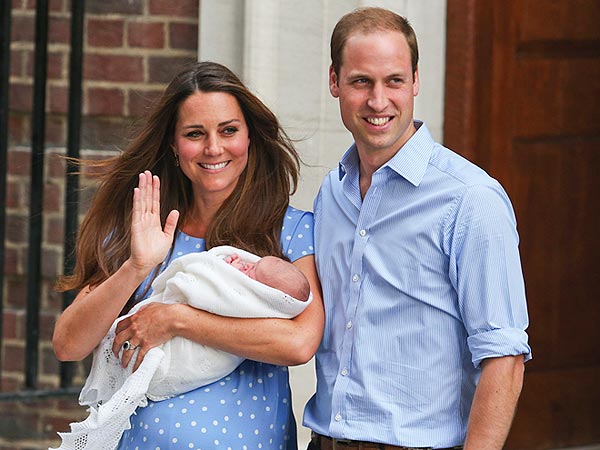
First, a belated Mazel Tov to William and Kate on the birth of their son, and may he enjoy a long, happy and healthy life.

Would that it were so for most of their fellow Brits, who - unlike the happy royal couple - have to endure the agony that is the Much Vaunted National Health System©:

"According to the Daily Express, a suite at the private Lindo Wing of London’s St. Mary’s hospital costs £6,265 per night — and this “excludes consultants’ fees ... 37 per cent of the British public think that she should be having her firstborn on the National Health Service"

Which begs the question: why do over a third of their fellow countrymen hate the Royal Couple and their newborn son?

Closer to home, how many rational folks believe that this is not going to be the case for our own "Royalty" once the ObamaTax is fully implemented?

Thought so.

Dr Jerry Maguire?

About 3 years ago, our own Certified Medical Office Manager (and now co-blogger) Kelley Beloff put some major holes in the Myth of the Rich Doctor:

"I recently received a report stating that the average reimbursement of the average office visit code (99213) for physicians is $65.49. Yep, $65.49. That is all your physician gets for seeing you in a normal 15 minute appointment."

And out of that comes his overhead, including staff salaries, office rent, malpractice insurance premiums and, presumably, a little vig for himself.

Fast forward a bit, and we learn that not much has changed except, perhaps, a certain perception:

"What physicians are trying to tell us is that they don’t see themselves as necessarily any more responsible for health care costs than all of those stakeholders"

Which stakeholders include patients (among others) who are used to virtually immediate and unlimited access to health care. One wonders if there may be a correlation there with the cost of health insurance.

One problem, of course, comes immediately to mind: the only insurance product that effectively addresses this issue is about to be ObamaTaxed out of existence:

"Now, co-blogger Nate points out that "an HSA with anything short of max deductible and no contribution would pass," and that's a fair cop. But without the ability to sock away tax-advantaged dollars in anticipation of future claims, you're not talking "HSA" at all."

Kinda wish they'd read the thing, before they passed it.

Exchanges offer cash back bonus!

Exchanges in DC just got a little more attractive, around 2-3% or a free trip to your sunny local of choice that is.

http://www.benefitspro.com/2013/07/23/credit-cards-causing-headaches-for-exchanges

"The exchange managers would consider taking SHOP premiums via credit card and debit card in 2015, if interest in that option appears strong."

If you had the option to pay your insurance premiums with credit card and receive cash back or points to use, what smart business owner wouldn't jump all over that? It is sort of ironic with government's push to squeeze every penny possible out of administrative cost  they willingly add 2-3% in administrative costs for payment convenience.

Spending money on brokers or customer service reps, not acceptable; spending more than that on credit card fees....no problem. On an average family premium of $700 the credit card fees are roughly $20. The cost of an ACH around $0.10.

Wednesday, 24 July 2013

Aetna back in the Game?

A month ago (to the day!) we noted that Aetna had suspended sales of its individual major medical products here in the Buckeye State.

This just arrived in my email inbox:
"We are pleased to announce that effective immediately, you may quote and sell new business for Aetna Advantage Plans for Individuals, Families and the Self-Employed in Ohio.

As a reminder, as of June 24 any Ohio applications that had already been submitted were processed by our underwriting team."
Hunh.

Wednesday WroundUp

■ The future is a lot closer than you might think. We know that Star Trek presaged cell phones, tablets and holograms; now we may actually get tricorders, too:


■ If you're not regularly reading Avik Roy's Apothecary, you're missing a lot. Here's a sample:

- The NY Times Tries — And Fails — To Protect Obamacare From Health Insurance ‘Rate Shock’

- The Devastating Obamacare Tax On Low Income Workers At Large Firms

- Labor Unions: Obamacare Will ‘Shatter’ Our Health Benefits, Cause ‘Nightmare Scenarios’


Lots more at Avik's place.

■ FoIB Holly R sends us this interesting item on life insurance and single folks:

"Single people are often responsible for parents or grandparents, and they want to make sure those dependents will still be cared for."

More at the link.

Cavalcade of Risk #188: Tech & Mech edition

Nina Kallen presents this week's round-up of risky posts, with an emphasis on "their technical and detailed nature." Have you ever wondered about health insurance in China? How about how to overcome pre-existing conditions when applying for insurance? All this - and more! - at this week's Cav.

Acquiring Health Insurance

One of the most important types of assurance is acquiring health insurance. In fact, it has already existed for over a hundred years. And even if other types have improved, this remains to be one of the most concrete, solid solution to be assured of the future especially when it comes to accidents and health concerns.

There are several countries over the world where socialized health care is not a possibility. These countries let their people acquire their own insurance from private health sectors through their companies. There are private service providers who acquire such from their employers and avail the coverage at a lesser cost.

When it comes to cost, it really depends on the type of health coverage you prefer. This is due to the fact that the amount of premiums varies depending on your salary, too. This might mean lesser coverage. If you get the policy from your employer, you have the choice to get more coverage due to insurance acquired by employers at price stripped off with a discount.
Private health coverage is provided if it is included in the policy. But when the disease or ailment is not part of the policy, the patient may need to find other means for medical expenses in the future. This is the essence of acquiring insurance policies but you better search about the possible ailments covered. Search for the policy that suits your medical health care needs the best where the premium payments are within your budget range.

When it comes to expectations, you have to consider that the medical health care is the only thing provided in your policy. This is apart from the policies you acquire from your employer. You may be able to reap more benefits if you avail such for a lesser cost. You can even choose the ones with higher coverage. You may have chosen the one with lesser coverage but if you can afford, then opt for the ones with greater medical benefit gains.

Private type isn't something you should be working for. If you can't afford it, then so be it. There are comprehensive health policies, which can offer more advantages. While they can be a bit costly, you are assured with a better plan. Sometimes, these plans even include your family and friends. This coverage is the best for those with families. An overseas coverage is also available. So, if you can afford them, it would definitely be a worthwhile investment.

Tuesday, 23 July 2013

Exchange Security Breach.....who pays?

There have been a lot of discussions this past week or two on the potential of ID theft in the exchanges. While people getting their ID stolen is bad, as a business owner my bigger fear would be losing my business because the exchanges allowed someone's ID to get stolen.

When I trade protected info with other firms we have Business Associate Agreements (BAA) and other written contracts that protect me if they fail to protect the data I provide them. If they screw up I would still get sued, which is just as bad or worse than actually losing, but hopefully would have some recourse. Cover my cost and any damages if it is proven to be their fault.

When CMS, IRS, or others require by law I send them data  they sign no such agreement. Nor for the most part are they liable or susceptible to individual lawsuits from citizens.

Assume you're an employer who purchases your company health plan through the exchange. In doing so you provide them SSNs, health details, and other PHI. That info becomes compromised and ends up in the public and the hands of criminals. Who do you think gets sued? How much assistance would you expect from Washington in proving it was in fact them that exposed the data and thus your not responsible? How much in Attorney fees to prove it wasn't you and will you ever see that money back?

The Value of Public Sector Pensions

The unfunded promises of public sector pensions are in the news, with the Detroit bankruptcy. Josh Rauh at Stanford and Hoover has a nice blog post on the subject titled "Public Sector Pensions are a National Issue''. (Josh and Robert Novy-Marx wrote a very influential paper (ssrn manuscript) alerting us to the size of the state and local pension bomb.)

Josh's baseline number for the value of underfunded pensions: $4 trillion. Why so big, and why is this a surprise? Because many governments calculate their funding by assuming they will earn 8% per year. Discounting a riskless liability (pensions) at a risky rate is a basic error in finance. It's made all the time. University presidents are notorious for demanding their endowments "reach for yield" in order to "make our rate of return targets."

Reading this piece sparks a few thoughts about the risks posed by pensions and other unfunded liabilities.

Let's report risks

How to make the error clearer? Perhaps focusing on present values and arguing about discount rates obfuscates the issue. Let's talk about risk. Maybe it would clear things up if pensions had to report a "shortfall probability" or "value at risk" calculation like banks do. OK, you are assuming an 8% discount rate because you're investing in stocks. What's the chance that your investments will not be enough?   Coincidentally, when I saw Josh's piece I was putting together a problem set for my fall class that illustrates the issue well.

Here is the distribution of how much money you will have in 1, 5, 10, and 50 years if you invest in stocks at 6% mean return, 20% standard deviation of return. I added the mean in black, the median (50% of the time you earn more, 50% less) and the results of a 2% risk free investment in green. (The geometric mean return is 4% in this example.)
(Note: there is a picture here. I've noticed this blog is getting reposted here and there in text-only form. Go to the original if you want the pictures)

The mean return looks pretty good. After 50 years, you get $20 for every dollar invested, or contrariwise an accountant discounting a promise to pay $20 of pensions in 50 years reports that the present value of the debt is only $1. But you can see that stock returns (these are just plots of lognormal distributions) are very skewed. The mean return reflects a small chance of a very large payoff.

In these graphs the chance of a shortfall is 54, 59, 62, and 76% respectively. As horizon increases, you are almost guaranteed not to make the projected (mean) return! The median returns -- with 50% probability of shortfall, in red -- are a good deal lower. And the modal "most likely" return is below the riskfree rate in each case.

How is it that people get this so wrong? Let's look at the distribution of annualized returns in each case. Remember, these are exactly the same situations, we're just reporting a different number.

In these pictures, the distribution of annualized returns is symmetric, the mean and median are the same, and the distributions get narrower and narrower for longer horizons.

Comparing the two graphs, you see that annualized returns are profoundly misleading about the risks you're taking. Annualized returns have a standard deviation that goes down at the square root of horizon. But the actual return has a standard deviation that goes up at the square root of horizon, and exponentiating makes it skewed with the larger and larger chance of underperformance. Money matters, not annualized returns.

So as usual, when arguments are getting nowhwere, perhaps we need to shift the question: please report your shortfall probabilities. And your plans for what you do with shortfalls.

In  many of those cases, the plan for shortfall  comes down to "the Federal Government bails us out" (or ERISA bails out private plans.) Well, if that's true, then we have a different and interesting discounting question. Maybe 8% is the right number if someone else pays the losses!

Finance also teaches us to think about "state contingent payoffs." What does the whole world look like in the bad events? If cities and states can't pay their pensions, this very likely because stocks have performed badly, and because we've had 20 years of sclerotic growth, no growth in tax revenues, to fund the pensions. Stock returns are not uncorrelated with other aspects of state, municipal, and corporate finance. Investing in stocks to fund pensions is like selling fire insurance on your house, rather than buying it. If the house burns down, then you pay the insurance company.

What debt really matters?

Even $4 trillion is not all that huge in the grander scheme of things.  The official Federal debt is $18 trillion. But if you add the present value of unfunded pensions, social security, medicare, Obamacare, and so on you can get numbers like $50 trillion or more. Which, it should be perfectly obvious, are not going to get paid, especially if we stay on the current slow growth trajectory.  But how important is this present-value observation?  Should we routinely add up all the unfunded promises, discount them properly using the Treasury yield curve, and report the grand total?

I worry most about runnable debt. Promises to pay people trillions in the far off future are a different thing than rolling over marketable debt every year. If it looks likely we won't be able to pay pensions in 20 years, there's not all that much pensioners can do about it. If it looks like we won't pay off formal short-term debt, markets can fail to roll over, leading to an immediate financial crisis.

So, much as I value Josh's calculation, and zinging those who want to minimize the necessity of ever paying off debt, it does seem there is a difference between marketable debt that needs to be rolled over every year and promises to pensioners and social security that may eventually be defaulted on, but can't cause an immediate crisis.

The cash flows do matter. If the government has promised to make pension and other payments that on a flow basis drain all its revenues, something has to give. As it has in Detroit.

A too-clever thought

A good response occurred to me, to those cited by Josh who want to argue that underfunding is a mere $1 trillion. OK, let's issue the extra $1 trillion of Federal debt. Put it in with the pension assets. Now, convert the pensions entirely to defined-contribution. Give the employees and pensioners their money now, in IRA or 401(k) form. If indeed the pensions are "funded," then the pensioners are just as well off as if they had the existing pensions. (This might even be a tricky way for states to legally cut the value of their pension promises)

I suspect the other side would not take this deal. Well, tell us how much money you think the pension promises really are worth -- how much money we have to give pensioners today, to invest just as the pension plans would, to make them whole. Hmm, I think we'll end up a lot closer to Josh's numbers.

Details

I used a geometric Brownian process, dp/p = mu dt + sigma dt with mu = 0.06 (6%) and sigma = 0.20 (20%). The T year arithmetic return is then lognormally distributed R_T = exp( mu - 1/2sigma^2)T + sigma root T e) with e~N(0,1). It has mean E(R_T) = exp(mu*T)=exp(0.06*T), median exp[mu-1/2sigma^2)T] = exp(0.04*T) and mode exp[(mu-3/2*sigma^2)T] = exp(0)=1.

Obamacare Hard Sell


Obamacare - Is Your Identity Safe?

This fall you will have an opportunity to buy your very own Obamacare health insurance policy. A plan designed by the same folks that gave us the bridge to nowhere and bailed out the auto industry, saving Detroit from financial ruin.
"Are you 100 percent finished establishing appropriate privacy protections?" Rep. Scott DesJarlais asked skeptically, with reference to the GAO report.
"No, we are not,"
How secure is the Obamacare system?
"I would say with regards to privacy and security we're probably about 80 percent,"
As they say, close enough for government work.
Millions of Americans will be asked to provide quite a bit of sensitive personal data in order to sign up for insurance coverage under Obamacare, including their social security numbers and income tax information. 
But you can protect your identity. It is very simple.
Don't buy on the exchange.
If you do buy on the exchange, ask yourself, "Is it safe?".

Just say no?

Here's a thought: what if they gave an Exchange and nobody came?

That's the premise behind a group calling itself the Citizens' Council for Health Freedom, which has rolled out a campaign to dissuade folks from buying plans on the public Exchanges. CCHF offers four rationales:
1.No private insurance – Obamacare is “Medicaid for the middle class” – or as CBO director Douglas Holtz-Eakin calls exchange coverage: “a second Medicaid program.”

2.No privacy – Data enters federal database accessible by IRS.

3.Limited choice – Coverage is “narrow network” policies.

4.High-cost premiums – Income redistribution to pay for exchange operations and subsidizing high-cost individuals.

While we certainly applaud their efforts, someone really needs to debunk some of their premises.

That would be me:

1. While the ObamaTax certainly encourages (and subsidizes) the expansion of Medicaid, the Exchanges themselves are a separate initiative. Conflating the two seems, well, confusing.

2. Anyone who's been paying attention to the news the past few months and still believes they have any privacy left is fooling themselves. The Data Hub doesn't care whether or not you've enrolled via an Exchange: all of that info is shared across agencies [ed: well, supposed to be shared might be more accurate].

3. Agreed: there is little doubt left that Exchange-based plans will employ "skinny" networks in an effort to rein in costs. A futile effort, of course, but an effort nonetheless.

4. This one's a maybe, and based on how one perceives the role of the government in what should be private transactions. On its face, I'd have to agree that the subsidies are simply robbing Peter to pay for Paul's insurance. Others might take a more charitable view.

CCHF also claims that "people still will be able to buy coverage outside the public exchange system, and that PPACA does not impose penalties on individuals simply because they buy coverage outside the public exchanges."

This is simply not true: only folks buying coverage on the public Exchange will be eligible for subsidies; I'd call that a pretty steep penalty for taking a pass.

In any case, it'll be interesting to watch this play out.

ADDENDUM: Bob has a slightly different take on privacy, the Exchanges and the Data Hub.

Monday, 22 July 2013

Are we prepared for the next financial crisis?

This is the title of a very well-prepared video made by Hal Weitzman, Dustin Whitehead and the Booth "Capital Ideas" team, based on interviews with many of our faculty. Direct link here (Youtube)

A disturbing ObamaTax thought...

"House Republicans received a boost from Democrats on Wednesday during votes to delay ObamaCare’s individual and employer mandates ... Twenty-two Democrats joined Republicans in a vote to delay the individual mandate"

This in response to the Obamastration's unilateral suspension of the (Evil) Employer Mandate a few weeks ago. The premise seems to be "if employers are off the hook, why shouldn't individuals be off it, as well?"

Which may well be "fair," but it raises a disturbing point: having looked high and low, I can find no evidence that either side is also proposing a moratorium on the Guaranteed Issue provisions of the ObamaTax.

Now you may be wondering, why is this a big deal, Henry?

Here's why: as of January 1, insurers will no longer be able to decline coverage to unhealthy people. In fact, they must write anyone and everyone who applies, regardless of health status. But if no one is required to "buy in," it seems likely that only the least healthy among us will do so. After all, absent the (evil) individual mandate, healthy folks have no real incentive (other than personal responsibility) to sign up. But "sick" people have ample motivation, and will likely do so in droves, further driving up rates for those already insured, and presumably causing some (many? most?) to drop their increasingly unaffordable coverage.

ObamaTax supporters, of course, consider this a feature, not a bug.

Monday Morning ObamaTax News

Late last month, the 10th Circuit Court of Appeals gave Hobby Lobby a temporary reprieve from the birth control convenience item mandate. Last Friday, "U.S. District Judge Joe Heaton ... stayed the case until Oct. 1 to give the federal government time to consider filing an appeal with the U.S. Supreme Court." So for now, at least, the owners of Hobby Lobby can enjoy their 1st Amendment rights (until SCOTUS rules it a tax, one supposes).

■ FoIB Holly R alerts us that Anthem Blue Cross will not be participating in the California small business health insurance Exchange:

"The company said it still intends to sell policies outside of the small-business exchange ... so its decision to stay out of the exchange could hamper the state's ability to make the marketplace attractive to businesses."

What does this mean? It means that Golden State businesses will have even fewer SHOP choices than they'd thought. Less competition means higher prices (compared to off-Exchange plans).

Econ 101.

■ And speaking of fewer choices:

"Nearly half of America’s brokers (45 percent) say they’re considering exiting the health insurance business altogether, with the majority (51 percent) saying they are only slightly or not at all confident about the future of their firm and their industry"

So if you like your agent, you can keep your agent.

Or not.

Do You Like Your Doctor?

Do you like your doctor? Does he or she take the time to listen, like Dr. Marcus Welby? Or
maybe they can overcome all odds like Dr. Mike Quinn. Perhaps you are swayed by their rugged good looks like Dr. Doug Ross of ER fame.

Enough dreaming. Back to reality.

Does this sound familiar?
If you have insurance that you like, then you will be able to keep that insurance. If you've got a doctor that you like, you will be able to keep your doctor. Nobody is trying to change what works in the system. We are trying to change what doesn't work in the system.
Weekly Standard

Who wouldn't be sucked in to that line?

Everything that is currently working will remain the same. You don't have to give up anything. No personal sacrifice.

That was then. This is now.


Notice how the wording has evolved.

They used to refer to the EXCHANGE.

Now it is a MARKETPLACE.

The candidate that campaigned on hope and change doesn't want you to know you will have to EXCHANGE what is working for something new.

Now you can seek coverage in a much friendlier marketplace where you MAY be able to keep your doctor.

So instead of Dr. Ross you get Ricky Ricardo.

D.C, you got some 'splainin' to do.


Friday, 19 July 2013

Health Insurance and Labor Supply

I just ran across an interesting paper, "Public Health Insurance, Labor Supply, and Employment Lock" by  Craig Garthwaite,  Tal Gross and my Booth colleague Matthew Notowidigdo.

They study an interesting event
... In 2005, Tennessee discontinued its expansion of TennCare, the state’s Medicaid system. ... Approximately 170,000 adults (roughly 4 percent of the state’s non-elderly, adult population) abruptly lost public health insurance coverage over a three-month period.
The result was
a large and immediate labor supply increase....we find an immediate increase in job search behavior and a steady rise in both employment and health insurance coverage. 

They call the phenomenon "employment lock." This is different from "job lock," people with preexisting conditions who stay with jobs they didn't want in order to keep health insurance. "Employment lock" is the choice by healthy people to work at all in order to get  insurance, or put in academic prose, "strong work disincentives from public health insurance that are unrelated to strict income-based eligibility limits."

The converse is a new danger for the ACA
Additionally, our estimates may provide useful guidance regarding the likely labor supply impacts of the ACA...

If such individuals could instead acquire affordable health insurance apart from their employer, many of them would exit the labor force entirely. As a result of employment lock, policies that expand access to health insurance apart from employers (such as the ACA) may have large labor market effects

... Using CPS data, we estimate that between 840,000 and 1.5 million childless adults in the US currently earn less than 200 percent of the poverty line, have employer-provided insurance, and are not eligible for public health insurance.Applying our labor supply estimates directly to this population, we predict a decline in employment of between 530,000 and 940,000 in response to this group of individuals being made newly eligible for free or heavily subsidized health insurance. 
They are quick to point out that this is not necessarily a bad thing."the effects do not necessarily imply a welfare loss for individuals choosing to leave the labor force after receiving access to non-employer provided health insurance." If people only work at a job they hate in order to get health insurance, then people may be better off not working. The policy world often just assumes more employment is always a great thing, which isn't true.

However, less employment is not necessarily a good thing either. These are childless adults. How are they supporting themselves if they don't work? Can it possibly be optimal for them to just sit around the house? We surely don't want to compare employer-provided health insurance with highly subsidized individual insurance for the unemployed-- that's a subsidy to leisure and obviously skewing the scales.

Most of all, low-income single people face extraordinarily high marginal tax rates and other disincentives to work. So, an artificial incentive to work in order to get health insurance may offset some of the otherwise irresistible incentives not to work. (A good calculation for Casey Mulligan!)

And whether the people are in the end better off working or staying home and receiving larger subsidies, the government and taxpayers are clearly worse off, as the people and their employers are not paying taxes any more.

In sum, academic caution aside, inducing a million childless adults to leave legal employment doesn't look like a good thing to me.  

The evidence is pretty cool. Here are some pictures lifted from the paper.