Friday, 30 August 2013

HHS wants you to meet Howard

I subscribe to hhs.gov and their Exchange online marketplace blog. Lately they have been sharing stories about people who will be impacted in a positive way under Obamacare. The most recent person we have been introduced to is Howard. He is a self employed software designer. Here is part of Howard's story pulled directly from the article.

          Uninsurable until 2014

          Howard shared his story with us:
“Five years ago, I was diagnosed with Diabetes. Once you get that diagnosis, the insurance company says, ‘you’re uninsurable.’ To get access to medical care now, what I do is participate in clinical trials on diabetes. I’m one of the people who actually are guinea pigs for new drugs. Insurance companies want perfect people, which is totally impossible. Everybody is going to get something at some time."
The average software designer makes roughly $90,530 per year according to the Bureau of Labor Statistics. So Howard's issue isn't cost as much as it is his health status and the fact he hasn't had insurance for five years.

One question: If Howard has been uninsured for five years and affordability isn't the issue, then instead of being a "guinea pig" doing clinical trials why didn't he enroll in PCIP?

Cavalcade of Risk #191: Call for submissions

Julie Ferguson hosts next week's Cav. Entries are due by Monday (the 2nd).

To submit your risk-related post, just click here to email it.

You'll need to provide:

■ Your post's url and title
■ Your blog's url and name
■ Your name and email
■ A (brief) summary of the post

PLEASE remember: ONLY posts that relate to risk (not personal finance tips and the like). And please only submit if you are willing to link back to the carnival if your submission is accepted.

Thursday, 29 August 2013

Open wide and say...Yikes!

One of the "core" elements of the train wreck's Essential Health Benefits mandate is the requirement to provide pediatric dental benefits.

FoIB Jeremy from Assurant Employee Benefits has some news about how that's going to play out in real life. As with so many aspects of the ObamaTax, there's little guidance from Capital City as to what's going to actually be enforced come January. It appears that large groups (ie over 50 employees) probably won't have to make any changes to their plans to remain in compliance.

Small groups, though, will see "pediatric dental EHB services embedded in their medical plan...but those will generally be only dental services for the pediatric population (under age 19)." [ellipses in original]

But what are these services? In general, they'll mirror current coverage available with the SCHIP program, with perhaps some broader coverage available for additional screenings.

But the truly scary part is what's going to happen to the cost of orthodontia.

Hunh?!

One of the key "features" of the dental benefit is coverage for "medically necessary orthodontia." But FoIB Fred of Companion Life wonders, since "a definition of medically necessary orthodontia has not been yet established, it is unclear" how many ortho claims will fall in that category?

It's perfectly clear how many such claims will fall under that rubric: 100% of them. Count on it. And, as we have seen in, for example, the higher education, when the government subsidizes something, its cost always skyrockets.

Sounds like the brace-fitters, at least, have reason to rejoice.

Oscar-care

Need health insurance? Think transparency. Think lower health care costs. Think lower health
insurance premiums. Think Oscar-care. 

Oscar-care is a start-up health insurance company making their debut on the New York health insurance exchange in a few weeks.
Oscar will have one plan in each of the ACAs metal-tiered categories, and additional plan options for the Bronze and Silver tiers. Although Oscar will have some of the familiar pillars of the health care industry like co-pays and deductibles for in-person visits, it introduces new elements like free telemedicine, free generic drugs and online price comparisons. Oscar health insurance will pioneer “a consumer experience, not a processor of claims,” explained Nazemi, with the goal of simply guiding individuals through the complex health system in an integrative and safe way.
Forbes

This is a great idea. Color me skeptical, but if it delivers anywhere close to the promise, Oscar should run for public office.

New York mayor comes to mind . . .
For frequent conditions or issues, patients will be able to find treatments right on the website and have 24/7 access to a physician through their unique partnership with the telemedicine company, TeleDoc. Additionally, the creators claim there will be no need to discuss prescription refills in-person with an expensive physician when a user can have “one-click refills” through a health records feed that resembles a Twitter timeline.
Oscar will also offer services at many hospitals and retail locations such as New York CVS CareMark. The partnership that Oscar and CVS have is so strong that CVS is building sites for Oscar. 
One concern to me is, HIPAA privacy. Just how secure is this?
The founders of Oscar claim that consumers will have access to a doctor by phone within 20 minutes of a request, with no co-pay. Perhaps the concept is not revolutionary, but if it works, the behavioral changes associated with seeking care could be seismic. Currently, not many patients log onto insurance carrier webpages before seeing a doctor, unless they are seeing if the doctor is in-network. Oscar, however, wants patients to start their care with the insurer, not just use it for payment submission.
Someone put a lot of thought into this.


Wednesday, 28 August 2013

Nasdaq freeze

An anonymous correspondent explained last week's Nasdaq freeze thus.
The truth about what happened Aug 22 to the Nasdaq is that new limit-up/limit-down rules took effect in derivatives (exchange-traded products) listed at Arca at the same time that new options began trading marketwide that day. Since the market is full of complex, multi-leg trades, bad data propagated, affecting Goldman’s options-trading algorithms Tuesday, spawning hundreds of derivatives trading halts by VIX expirations Wednesday, and producing bad data in the consolidated tape by Thur, halting Nasdaq trading. So the real culprit was the SEC. But it’s bad form to say publicly that the regulator is responsible for jeopardizing the market.
I can't vouch for the story, or even for understanding it all. But I'm interested in several emerging stories that some trading pathologies are in part unintended consequences of SEC regulation. It's also not the first time I hear of financial market participants afraid to speak out and earn the disfavor of their regulator.

We've got Answers!

Recently, I was invited to apply for the position of Content Expert Writer (CEW):Insurance for Answers.com. The process was interesting: an intense, comprehensive on-line writing and editing test and a requirement to craft real answers for several Answers.com entries (both within and without my subject area).

They took a few weeks to evaluate the candidates (there were apparently several); I have been offered the position ("there can be only one").

I am very flattered, and eager to begin.

Needless to say, this position is in addition to my real job and InsureBlog, so I'll be learning (re-learning?) some time management skills. Fortunately, I have the best co-bloggers on the 'net, so if I end up slacking in my IB duties for a brief while as I come up to speed, I know that our readers won't be neglected - Thank you all!!

Obamacare for Dummies: Navigator Edition

Navigator grants have been awarded! HHS announced that funding would be $67 million spread across 33 states. As Mike noted in his post earlier, the funding magically increased from $54 million thanks to the Prevention and Public Health Fund Obamacare Slush Fund  that authorizes Kathleen Sebelius free reign over how to use it.

Anywho, with funds distributed, the hiring should begin and Navigators will soon be able to go online and complete their required training. In fact, they can already get a head start on the educational part.

Today CMS released a 217 page Standard Operating Procedures Manual for Navigators. The manual includes important stuff such as: making sure you smile, occasionally nod, say thank you, and most importantly, become an expert...in 34 days.

This is going to run so smoothly...

Tuesday, 27 August 2013

Such a deal!

I'm from the Government and I'll take you to the New World. Trust Me. Uh, do you happen to have a map?

In Connecticut, "Navigators" have been designated in each county -  after a nominally competitive bidding process - to manage "assisters" in the county who will actually be responsible for helping people enroll in Obamacare.  Connecticut is operating its own Exchange.   More info here

Here is Connecticut's definition of "Navigators"
The following organizations can qualify as Navigators:

• Community and consumer¬focused nonprofit groups
• Trade, industry and professional associations
• Unions
• Resource partners of the Small Business Administration
• Indian tribes, tribal organizations, urban Indian organizations
• Other public or private entities that meet Navigator requirements
The following organizations cannot be Navigators:

• Health insurance issuers
• Subsidiaries of health insurance issuers
• Associations that include members of the insurance industry or that lobby on behalf of the insurance industry
Actual advice to real people will be doled out by the "Assisters".  Connecticut promises this:
Assisters are individuals in your community – they work at nonprofits, small businesses, faith-based and other community organizations . . .  Assisters will be:

• Certified with training in the Affordable Care Act, Access Health CT, providing appropriate support based on language and culture, and more
• Trusted community members who have undergone thorough background checks
• Ready to help individuals, families and small businesses during the initial enrollment period (October 1, 2013-March 31, 2014)
Assisters apparently cannot be licensed insurance agents unless they happen to work for one of the specified community organizations.  So it appears Connecticut is not allowing anyone to become either a Navigator or an Assister who might actually, you know, have expert insurance knowledge but instead intends to employ people who must learn everything they need to know about Obamacare in what? - 30 days?  But - don't worry! - they will all be "certified" and "trusted" and they will all have undergone "thorough background checks."   All information they give you will be "based on language and culture".  Oh,  "and more".

Well, what can possibly go wrong?

Underwriting Cancer

Recently, I had an interesting experience with a client which I'd like to share as an example of how important agent communication can be.

A gentleman called up inquiring about some additional life insurance. I did my usual pre-screen process, and he was in decent health, no tobacco use, "normal" height and weight. Got the quote, agreed on a plan design, and sent in the application.

As with most policies nowadays, this one required a routine "paramed" exam (blood, urine, physical measurements, nothing major). The exam was scheduled for this coming Friday.

Today he called with some discouraging news: as part of a routine test last week, he learned that he had prostate cancer. Thankfully, it's in the early stages, but of course this poses a problem with the new life insurance application.

When he called to tell me the news, he assumed that we'd just pull the plug on the application, but I suggested that perhaps all was not lost. There have been some significant changes in life insurance underwriting the past few years, and all was not necessarily lost. I promised to call my underwriter and then we'd go from there.

So, I called my underwriter (one of the perks of my primary carrier is that I have access to the actual underwriter, not just an assistant), and explained the situation. I expected that she'd agree with the client, and pull the application. To my surprise, however, she started asking questions. Turns out, their underwriting guidelines are more flexible than I'd believed, and there's actually a decent chance that we can still get the policy issued (albeit at a temporarily much higher rate). All of this will depend on the conversation my client has with his surgeon next week, but things are at least hopeful.

Live and learn.

Monday, 26 August 2013

Macro-prudential policy

Source: Wall Street Journal
Not a fan. A Wall Street Journal Op-Ed. Link to WSJLink to pdf on my website. Director's cut follows:

Interest rates make the headlines, but the Federal Reserve's most important role is going to be the gargantuan systemic financial regulator. The really big question is whether and how the Fed will pursue a "macroprudential" policy. This is the emerging notion that central banks should intensively monitor the whole financial system and actively intervene in a broad range of markets toward a wide range of goals including financial and economic stability.

For example, the Fed is urged to spot developing "bubbles," "speculative excesses" and "overheated" markets, and then stop them—as Fed Governor Sarah Bloom Raskin explained in a speech last month, by "restraining financial institutions from excessively extending credit." How? "Some of the significant regulatory tools for addressing asset bubbles—both those in widespread use and those on the frontier of regulatory thought—are capital regulation, liquidity regulation, regulation of margins and haircuts in securities funding transactions, and restrictions on credit underwriting."

This is not traditional regulation—stable, predictable rules that financial institutions live by to reduce the chance and severity of financial crises. It is active, discretionary micromanagement of the whole financial system. A firm's managers may follow all the rules but still be told how to conduct their business, whenever the Fed thinks the firm's customers are contributing to booms or busts the Fed disapproves of.

Macroprudential policy explicitly mixes the Fed's macroeconomic and financial stability roles. Interest-rate policy will be used to manipulate a broad array of asset prices, and financial regulation will be used to stimulate or cool the economy.

Foreign central banks are at it already, and a growing consensus among international policy types has left the Fed's relatively muted discussions behind. The sweeping agenda laid out in "Macroprudential Policy: An Organizing Framework," a March 2011 International Monetary Fund paper, is a case in point.

"The monitoring of systemic risks by macroprudential policy should be comprehensive," the IMF paper explains. "It should cover all potential sources of such risk no matter where they reside." Chillingly, policy "should be able to encompass all important providers of credit, liquidity, and maturity transformation regardless of their legal form, as well as individual systemically important institutions and financial market infrastructures."

What could possibly go wrong?

It's easy enough to point out that central banks don't have a great track record of diagnosing what they later considered "bubbles" and "systemic" risks. The Fed didn't act on the tech bubble of the 1990s or the real-estate bubble of the last decade. European bank regulators didn't notice that sovereign debts might pose a problem. Also, during the housing boom, regulators pressured banks to lend in depressed areas and to less creditworthy customers. That didn't pan out so well.

More deeply, the hard-won lessons of monetary policy apply with even greater force to the "macroprudential" project.

First lesson: Humility. Fine-tuning a poorly understood system goes quickly awry. The science of "bubble" management is, so far, imaginary.

Consider the idea that low interest rates spark asset-price "bubbles." Standard economics denies this connection; the level of interest rates and risk premiums are separate phenomena. Historically, risk premiums have been high in recessions, when interest rates have been low.

One needs to imagine a litany of "frictions," induced by institutional imperfections or current regulations, to connect the two. Fed Governor Jeremy Stein gave a thoughtful speech in February about how such frictions might work, but admitting our lack of real knowledge deeper than academic cocktail-party speculation.

Based on this much understanding, is the Fed ready to manage bubbles by varying interest rates? Mr. Stein thinks so, arguing that "in an environment of significant uncertainty . . . standards of evidence should be calibrated accordingly," i.e., down. The Fed, he says, "should not wait for "decisive proof of market overheating." He wants "greater overlap in the goals of monetary policy and regulation." The history of fine-tuning disagrees. And once the Fed understands market imperfections, perhaps it should work to remove them, not exploit them for price manipulation.

Second lesson: Follow rules. Monetary policy works a lot better when it is transparent, predictable and keeps to well-established traditions and limitations, than if the Fed shoots from the hip following the passions of the day. The economy does not react mechanically to policy but feeds on expectations and moral hazards. The Fed sneezed that bond buying might not last forever and markets swooned. As it comes to examine every market and targets every single asset price, the Fed can induce wild instability as markets guess the next anti-bubble decree.

Third lesson: Limited power is the price of political independence. Once the Fed manipulates prices and credit flows throughout the financial system, it will be whipsawed by interest groups and their representatives.

How will home builders react if the Fed decides their investments are bubbly and restricts their credit? How will bankers who followed all the rules feel when the Fed decrees their actions a "systemic" threat? How will financial entrepreneurs in the shadow banking system, peer-to-peer lending innovators, etc., feel when the Fed quashes their efforts to compete with banks?

Will not all of these people call their lobbyists, congressmen and administration contacts, and demand change? Will not people who profit from Fed interventions do the same? Willy-nilly financial dirigisme will inevitably lead to politicization, cronyism, a sclerotic, uncompetitive financial system and political oversight. Meanwhile, increasing moral hazard and a greater conflagration are sure to follow when the Fed misdiagnoses the next crisis.

The U.S. experienced a financial crisis just a few years ago. Doesn't the country need the Fed to stop another one? Yes, but not this way. Instead, we need a robust financial system that can tolerate "bubbles" without causing "systemic" crises. Sharply limiting run-prone, short-term debt is a much easier project than defining, diagnosing and stopping "bubbles." [For more, see this previous post] That project is a hopeless quest, dripping with the unanticipated consequences of all grandiose planning schemes.

In the current debate over who will be the next Fed chair, we should not look for a soothsayer who will clairvoyantly spot trouble brewing, and then direct the tiniest details of financial flows. Rather, we need a human who can foresee the future no better than you and I, who will build a robust financial system as a regulator with predictable and limited powers.

*****
Bonus extras. A few of many delicious paragraphs cut for space.

Do not count on the Fed to voluntarily limit its bubble-popping, crisis management, or regulator discretion. Vast new powers come at an institutionally convenient moment. It’s increasingly obvious how powerless conventional monetary policy is. Four and a half percent of the population stopped working between 2008 and 2010, and the ratio has not budged since. GDP fell seven and a half percent below “potential,” in 2009 and is still six points below. Two trillion didn’t dent the thing, and surely another two wouldn’t make a difference either. How delicious, in the name of “systemic stability,” to just step in and tell the darn banks what to do, and be important again!

Ben Bernanke on macroprudential policy:
For example, a traditional microprudential examination might find that an individual financial institution is relying heavily on short-term wholesale funding, which may or may not induce a supervisory response. The implications of that finding for the stability of the broader system, however, cannot be determined without knowing what is happening outside that particular firm. Are other, similar financial firms also highly reliant on short-term funding? If so, are the sources of short-term funding heavily concentrated? Is the market for short-term funding likely to be stable in a period of high uncertainty, or is it vulnerable to runs? If short-term funding were suddenly to become unavailable, how would the borrowing firms react--for example, would they be forced into a fire sale of assets, which itself could be destabilizing, or would they cease to provide funding or critical services for other financial actors? Finally, what implications would these developments have for the broader economy? ...
As if in our lifetimes anyone will have precise answers to questions like these. In case you didn't get the warning,
... And the remedies that might emerge from such an analysis could well be more far-reaching and more structural in nature than simply requiring a few firms to modify their funding patterns.
A big thank you to my editor at WSJ, Howard Dickman, who did more than the usual pruning of prose and asking tough questions.

Early Renewal Fever - catch it!

Previously, we reported that several carriers have begin offering early renewal options to  small group clients in an effort to stave off (if only for a while) some of the more egregious effects of the ObamaTax.

This morning's email brought the first such offer I've seen for individual clients. From Medical Mutual of Ohio:

"For your clients in a non-grandfathered plan.... an opportunity to consider an early renewal of their individual plan for December 1, 2013.  This will allow them to keep their current plan until December 2014 if they choose."

Again, this is only a short-term fix; eventually, they'll have to move over to an ObamaTax-compliant plan. But for a little while at least, they'll be able to keep the insurance they currently have.

And the check'll be in the mail.

Sunday, 25 August 2013

Taylor Jackson Hole Blog

John Taylor is blogging from Jackson Hole

Day 1: Skepticism of unconventional policy  Academics say quantitative easing does't do much. I happen to agree

Forward guidance Is "forward guidance" clarification of a rule, i.e. here is what we think we'll feel like doing in the future, or a precommitment? To the Bank of England and ECB, the former.

This looks like an interesting series to watch.

Friday, 23 August 2013

MOOC

I will be running a MOOC (massively online) class this fall. Follow the link for information. The class will roughly parallel my PhD asset pricing class. We'll run through most of the "Asset Pricing" textbook. The videos are all shot, now I'm putting together quizzes... which accounts for some of my recent blog silence.

So, if you're interested in the theory of academic asset pricing, or you've wanted to work through the book, here's your chance. It's designed for PhD students, aspiring PhD students, advanced MBAs, financial engineers, people who are working in industry who might like to study PhD level finance but don't have the time, and so on. It's not easy, we start with a stochastic calculus review!  But I'm emphasizing the intuition, what the models mean, why we use them, and so on, over the mathematics.

Do You Think This Might Impact the Cost of Vacation?

Where will you go on vacation next year? Some place close by or maybe take an airplane to some exotic isle? Or maybe just a fun place to play a round or more of golf.  


You might want to buy your ticket now before the price goes up.
large employers who self-insure should be exempt from most of Obamacare’s most onerous regulations. It turns out, however, that even America’s largest companies face higher costs due to the health law. A recently-leaked letter from Delta Air Lines to the Obama administration states that the “cost of providing health care to our employees will increase by nearly $100,000,000 next year,” much of it due to Obamacare.
Forbes

$100 million isn't peanuts.
Self-insurance works a different way. Many large employers, instead of paying premiums to an insurance company, cut out the middleman and pay directly for the health costs that their workers incur. This involves additional financial risk for the employer, but the company saves money that would otherwise go to an insurer’s overhead.
This is important.

With any self funded plan, including Delta, the PLAN design can have a major impact on the number of claims paid as well as the total dollars spent on claims.

If a plan has to cover more things (such as birth control at no cost to the insured) that cost directly impacts claims and is passed on in the form of higher premiums.
The law charges Delta a “reinsurance fee” that goes toward funding the law’s subsidized insurance exchanges. But Delta employees get coverage from Delta, not from the exchanges; hence, the fee is effectively a $10 million tax on Delta for other government purposes.
Just another of those hidden Obamataxes.
“More than 8,000 (adult) children [have been] added to our rolls resulting in a permanent increase in our overall costs of about $14 million per year.” 
That's the provision requiring health insurance plans to cover "children" up to age 26.

All these free and wonderful things Mr. Teleprompter wants us to have come with a price.

Se Habla Obamacare?

If you ever wondered why the government is spending so much money and effort to SELL us on a plan that is law, this will make you scratch your head. 


Recent polls show that 2/3 of those here legally do not want Obamacare. So what is the plan now?

Recruit people from outside the country to come here so they can get government subsidized health insurance.

"Well, the (Obamacare) bill is crafted in such a way that those who are undocumented will not have access to the tax credits or shopping in the (health insurance) marketplace. That has been limited, which is, frankly, why -- another very keen reason why we need comprehensive immigration reform," Sebelius told a gathering of Latinos in Philadelphia. 
CNS News

Did you follow that logic?

Only with immigration reform, AKA amnesty, will they have enough people covered by Obamacare to make it popular.


Mid Friday Good news, Bad news

First, from our friend Holly R, the good news:

"5 Body Parts Scientists Can 3-D Print"

As we've mentioned before, this tech is a potential game changer for dealing with diseased or damaged organs, blood vessels, even bones.

Now the bad:

"Gallup surveyed 1,021 U.S. adults ages 18 and older in mid-August, it found only 15 percent of all participants “were very familiar” with PPACA. Eighteen percent said they were “not too familiar,” and 12 percent admitted they were “not all familiar” with the law."

Now admittedly, this is only "bad news" to proponents of the train wreck. That is, after all the money and efforts thrown at educating the public about the (supposed) benefits of the ObamaTax, for its most crucial demographic to be this uninformed is quite amusing.

Oh, and this just in: President Obama's promise that premiums would decrease 3000% under the ObamaTax appears to be coming true:

"The average employer-provided family health insurance premiums have climbed $2,976 since 2009"

This from the right-wingers at the Kaiser Family Foundation, so there's that.

Thursday, 22 August 2013

First Big Brown, now the Cavaliers

Bob noted yesterday that UPS was on the bleeding edge of employers dumping spousal coverage. Today we learn that - surprise! - the domino's are starting to fall:

"The University of Virginia said Wednesday that it will stop offering health insurance to some employees' spouses because of rising costs under ObamaCare."

But remember folks, "if you like your current insurance plan, you can keep your current insurance plan."

Until you can't.

He's only MOSTLY dead.... [UPDATED]

Here's something you don't see every day:

"After showing no signs of life for 45 minutes and being declared dead, a 37-year-old Ohio man suddenly came back to life ... doctors treated Yahle with every medicine they could for 45 minutes, but he didn’t respond and was officially declared dead."

Mr Yahle had had some breathing problems earlier in the day, which had prompted a 911 call and ambulance ride. After hearing that his father had been pronounced dead, his 17-year-old son rushed to his side, yelling “Dad, you’re not going to die today."

Turned out he was right.

Which by the way brings up an interesting (well, to me, anyway) question: given that he was pronounced dead by a licensed physician at an accredited facility, is his wife eligible to file a claim on his life insurance? Generally, that requires a death certificate, but if he was legally pronounced dead.... [ed: see update, below]

On the other end of the spectrum, here's some good news for folks who are having problems conceiving a child:

"European and American scientists say a simplified version of the entire procedure aimed at developing countries could be done for about 200 euros ($265) with generic fertility drugs and basic lab equipment that would fit inside a shoebox."

Currently, IVF is an expensive proposition (although, to be fair, a whole lot less than actually raising one's progeny), so this may be the breakthrough for which anxious parent-wannabes have been waiting.

UPDATE: On a hunch, I posed this question to the claims folks at our primary carrier. Good sports that they are, they replied:

"NO Claim. We would require a certified death certificate, and there wouldn’t be one issued because they are not dead."

Oh, well - easy come, easy go.

The ObamaTax doesn't affect you

Well, unless you call theft "affecting me."

As Bob pointed out yesterday, large companies aren't stupid - they simply find ways to manage the stupidity raining down on them from Capital City. Sometimes, though, it's not just raining, but pouring.

Case in point? Delta Airlines:

"The [ObamaTax] requires large employers to pay an annual fee of $63 per covered participant in 2014. For Delta’s roughly 160,000 enrolled active and retired employees and their family members, this represents more than $10 million added to the cost of providing health care next year."

Remember also that employers don't pay this fee: customers do. So next time you fly. remember to tip your friendly TSA groper agent and stop grumbling about the extra few bucks you're transferring to folks who - unlike you - actually get those subsidized health insurance rates thanks to the $63 slush-fund Pre-Existing Condition Fee.

Back to school time...

And for many folks, that means moving day for Junior. Laptops, TV's, clothes, and all the rest are potentially at risk for theft or damage, and the question then becomes:

"Are they covered?"

Well, that depends.

The Insurance Information Institute recommends:

1 - Create a “dorm inventory” to document what’s leaving home. Too much bother? Needn't be: just use their handy (and free!) widget. And yes, there's an app for that (available at the site, for both Androids and iPhones)

2 - Check homeowners or renters policies for off-site coverage. Many homeowners and renters policies include coverage for personal belongings even when their off-site (such as residing in the dorm with Junior).

As always, check with your agent for specifics on your policy, including things like jewelry and instruments. You'll be glad you did.

Cat Health Insurance

Cat health insurance is a great way to ensure that you're not faced with huge bills that you can't pay when your cat falls ill or is injured. Operations and certain treatments on cats cost hundreds if not thousands of dollars. If you're unable to pay then you may have to put your pet to sleep and that would be a tragedy for the sake of very few dollars a month.
For a few extra dollars per month many cat insurances will cover annual checkups, vaccinations and even flea and tick medications so you won't have to face those huge bills and you'll be sure that your cat is fully protected.

Vet's fees vary tremendously but depending on the region, each visit to the vet could cost you between $75 and $200 but with cat health insurance you could save as much as 70% of that.
Cats are even more likely to pick up illnesses than dogs as dogs are usually confined to their owner's property or out on a lead but outdoor cats do as they please and frequently have contact with other animals which could be infected with any transmittable feline disease.

Cats are also more likely to have accidents because they can't resist climbing, jumping and generally getting into scrapes. They are also more likely to be run over or cause a traffic accident.
One such incident could set you back by at least $1,000 in veterinary fees but with cat health insurance you will be able to just tell the vet to go ahead and medicate or operate.
I can say from personal experience that cat health insurance is a lifesaver. During the lifetime of just one of my cats, she was poked in the eye by a twig and needed three operations and she jumped off the garage room and chipped a bone in her leg which required x-rays and treatment. She ran in front of a speeding car which clipped both her back legs, shearing the tendons in one leg, resulting in an operation, a stay at the vets and medication. Ultimately, poor Tiger developed some sort of blood disorder which meant tests, a stay at the vets and eventually euthanasia.

In the end I worked out that in Tiger's fairly short life (13 years) I had paid far less in insurance premiums that I would have paid in vet's fees and more importantly, I didn't have to find large sums of money which I could ill afford.

Wednesday, 21 August 2013

Obamacare Navigators - Now Hiring

Need extra money? Do you enjoy conversation with strangers? Do you consider yourself a
"people" person?

If so, this may be for you.
The "in-person counselor" jobs, located in every corner of the state, range from a $9-an-hour part-time evening job in Clinton County to a $45,000-a-year project coordinator position in Chicago for someone with experience in community organizing and public speaking.
The workers will help consumers apply for coverage, and will answer questions and explain differences between the insurance policies offered on the new online marketplace. They will help consumers figure out if they're eligible for Medicaid or for new tax credits that will help many people pay for coverage.
Community organizing and public speaking experience. Who do we know with those qualifications?
Job applications are being collected online and anyone hired will get three days of training about health insurance, enrollment rules and other complicated aspects of the health law.
Three days of training on a 2300 page law + 15,000 pages of rules and regulations.
What could possibly go wrong?

Exchanges Plus/Minus

On the "plus" side, we learn today that:

"More Americans than predicted may decide to flock to the new public exchanges for health coverage ... at least 8.5 million consumers plan to buy insurance through exchanges ... a prediction far outpacing what the Congressional Budget Office has projected"

So, success.

That is, if they actually open on time, and if there are actually carriers participating, and if enough folks aren't turned off by the thought of their their personal financial, medical and tax information being in the hands of unlicensed, uninsured and under-educated Navigators.

Seems like that's a lot of if's, doesn't it?

On the other hand, it appears that the legacy media is just now learning something that InsureBlog readers have known for a while: that the subsidy reimbursement scheme has some major holes:

"One of the major concerns insurers have is whether the millions of individuals who buy insurance when the [ObamaTax] kicks in will be able to send in a premium check promptly every month"

Whoa there, Nellie! "Will be able?  How 'bout "why would they bother?" After all, as Bob asked earlier this summer, what if "a policyholder decides to exercise their right to a 90 day grace period and does not pay their premium for 3 months?" They (arguably) had coverage, but was it ever really in force?

And who cares?

Well, the providers do, and they've petitioned Ms Shecantbeserious to change a key provision:

"CMS’s approach also unfairly burdens providers who treat these patients because they will not get paid by the (insurance company) for covered services and will have to wait to try to obtain direct payment from the patient"

Maybe that's just the cost of being a provider in an Exchange-based network.

Big Brown Says Goodbye to Spouses

Atlanta based UPS is pulling the plug on health insurance benefits for an estimated 15,000
working spouses. In a cost saving move caused at least in part by Obamacare, many will lose their UPS coverage.

Rising medical costs, “combined with the costs associated with the Affordable Care Act, have made it increasingly difficult to continue providing the same level of health care benefits to our employees at an affordable cost,” UPS said in a memo to employees.
According to Kaiser, UPS told white-collar workers two months ago that 15,000 working spouses eligible for coverage by their own employers would be excluded from the UPS plan in 2014.
So what does the Obama administration have to say about this?
"The health care law will make health insurance more affordable, strengthen small businesses and make it easier for employers to provide coverage to their workers," said Joanne Peters, spokeswoman for the U.S. Department of Health and Human Services.
The big lie continues.

Cavalcade of Risk #190: Late summer edition

Jacob Irwin hosts this waning days of summer round-up of interesting risk-related posts, including lightning strikes and cyber strikes. Not to be missed (well, you don't want to get hit by either of those).

NB: We're scheduling Fall Cav's, just drop us a line to claim yours. It's easy, fun, and a nice little traffic bump.

Tuesday, 20 August 2013

LTCi - Ch-ch-changes (NOT good news)

As we noted last Fall, Long Term Care insurance rates for the fairer sex have been artificially flat for quite a while, and were due for some "adjustment" (read: increase). Recently, my good friend (and home town LTCi guru) Chris van B emailed that "actuarial data shows that 67% of LTC insurance claims go to females. As a result, two of the largest carriers, Genworth Financial and John Hancock, have introduced gender based rates."

In English, this means that unisex rates (where males subsidize females) are on the way out, at least for these two carriers (although thus far Hancock is the only carrier to have these new rates approved in Ohio). It seems no stretch that they are but early adopters, and that other carriers will soon follow suit.

And speaking of John Hancock and LTCi, they're about to bail on the Golden State's long term care Partnership Program. And of course, they explained this in the simplest of terms:

"Sales of the California partnership program policy have been modest, and "we have found that the strategic direction of our LTC products and markets no longer synchronizes with California partnership regulatory requirements," the company said in a memo to producers."

Uh-hunh. That's insure-speak for: "we haven't been selling enough of these policies to make it worth our while to continue even trying." One hopes that this is an outlier, because the Partnership Program is a great deal for seniors and wannabe-seniors.

Life Imitating A News Article, Imitating Life


While having lunch the other day, I was talking with two physicians, one retired from active practice and the other having practiced for close to 30 years. The conversation turned to physicians today and the financial difficulties they face. Retired Physician was a Cardiologist. With steady decrease to medical reimbursements over the years, Retired Physician made less money each year he practiced, while his skill and expertise increased. Since medicine is paid by a piece meal basis, payment is for each patient served and the only way to make more money is to see more patients, physicians are burning out and going broke.

This isn't a big secret; a recent CNN piece noted that  “[t]his quiet reality, which isspreading nationwide, is claiming a wide range of casualties, including family physicians, cardiologists and oncologists.

As our conversation continued, Retired Physician lamented that as his practice grew (at one point there were 49 employees), his pay and his partners' pay continued to decline as more money went into payroll, benefits, malpractice and overhead. Even though he had never been sued, his malpractice insurance premiums continued to rise each year. What finally made him retire was when he had to make a decision about which long-term employees to let go (some had been with the practice for 20 years) in order to stay in business, or what benefits to cut in order meet other financial requirements.

Dr. William Pentz, 47, a cardiologist with a Philadelphia private practice, and his partners had to tap into their personal assets to make payroll for employees last year.  "And we still barely made payroll last paycheck," he said. "Many of us are also skimping on our own pay."

What we all agreed on was that with the low reimbursements and growing federal regulations, medicine is not the once-lucrative business that had attracted our best and brightest. Today’s physicians will face a lower standard of living due to higher debt to pay back and lower incomes.

Doctors list shrinking insurance reimbursements, changing regulations, rising business and drug costs among the factors preventing them from keeping their practices afloat.  "Many are too proud to admit that they are on the verge of bankruptcy," she said. "These physicians see no way out of the downward spiral of reimbursement, escalating costs of treating patients and insurance companies deciding when and how much they will pay them."”

Medicine in America, motivated by success, had become the stalwart in the world. Our physicians, considered to be the leaders in medicine, had breakthroughs that have increased our life spans and our quality of life. Diseases, once life sentences, have been conquered and others have treatments that allow individuals to continue to live productive lives. How have these men and women been rewarded? By facing constant cuts to their very livelihood, they may not be able to continue to practice their chosen profession.

On average, there's a 10% to 15% profit leak in a private practice," he said. Much of that is tied to money owed to the practice by patients or insurers. "This is also why they are seeing a cash crunch." "The economics of providing health care in this country need to change. It's too expensive for doctors," he said. "I love medicine. I will find a way to refinance my debt and not lose my home or my practice."

As we ended our lunch - a retired physician, a still practicing physician and a health care executive - we hoped that the business and profession of medicine would not end, but continue to grow and prosper.

Federal law requires that Medicare reimbursement rates be adjusted annually based on a formula tied to the health of the economy. That law says rates should be cut every year to keep Medicare financially sound.

Although Congress has blocked those cuts from happening 13 times over the past decade, most recently on Dec. 23 with a two-month temporary "patch," this dilemma continues to haunt doctors every year.”

Monday, 19 August 2013

New York Time comment section shows just how uninformed the public is

If you can somehow get past Krugman and how ignorant of basic facts he is, the comment sections are somehow even worse. What you have to wonder are people just being this dishonest or are they really this clueless?

http://www.nytimes.com/2013/08/19/opinion/krugman-one-reform-indivisible.html?comments#permid=14:1

"VikramPhatak,Austin, TX

I am also the owner of a rapidly expanding busines. (Mine is in computer security and I have 48 employees.) Average salary is $90K+ and we already offer health benefits.

I am having the exact opposite experience. Health insurance premiums are set to go DOWN by nearly 50% in October, saving the company $35K/mo ($420K/yr). That savings will enable me to hire 4 more people, while increasing profits for investors.

Apparently my savings are due to no longer having to pay for freeloaders. As a proud Texan and entrepreneur I am happily surprised by Obamacare."

Where to start;

Rates going down in October means this is a pre-community care  rating renewal. The only ObamaCare feature that could account for any savings is MLR reform which is already in its second year so that didn't cause a 50% decrease.

Saving 35K per month means they were paying close to 70K per month for a 48 life group. All states have small group reform, the only policy I have ever seen close to $1500 per emlployee were $0 or very rich plans for very old and sick groups. Which would be helped, but not till January.

No longer having to pay for freeloaders is the give away this entire comment is BS, ObamaCare does the exact opposite. It guarantees coverage when people need it freeing then to wait till then to buy it. It also allows those with unhealthy lifestyles to stick the rest of use with a large portion of their expenses.

The last comment in the thread was a gem;

"I did have an associate atty who is not technically an employee (she is "Of Counsel") of the firm, but who has been on our health care policy for 15 years. She was unceremoniously kicked off as of Sep 1 and has been forced to find individual coverage, but she has health issues, the reason why she was kicked off in my opinion. She is not eligible for COBRA due to this stupid employment rule of the ins companies. This is a very serious matter for her, and her family. So our broker has been able to write her some kind of temporary coverage to "...get her to Jan 2014" when she cannot be denied coverage, though the matter will probably still not be a favorable as her current (former) coverage is. Talk about your "death panels."

Disgraceful. We need universal, single-payer coverage for all American citizens."

This is a law firm, complaining they can't cover a non employee on their EMPLOYEE benefit plan. Notice the call for single payer, but no offer from the law firm to you know actually hire the individual which would solve the problem right away. 

Ja, ve haff der insurance

As we move inexorably closer to a nationalized, single-payer health care system, it may be worth noting that another such system is fading, quickly:

"The German government abolished the three-year waiting period for an individual to move from state-regulated health insurance to private health insurance. This has lead to more Germans purchasing private cover."

But why would good German citizens turn up their noses at "free" health care? Pretty simple, really: they've "started investing in private health insurance products to gain access to better medical treatment, without having to pay expensive medical costs."

Remember when we had such a system?

Good times, good times.

Forever 21 no more

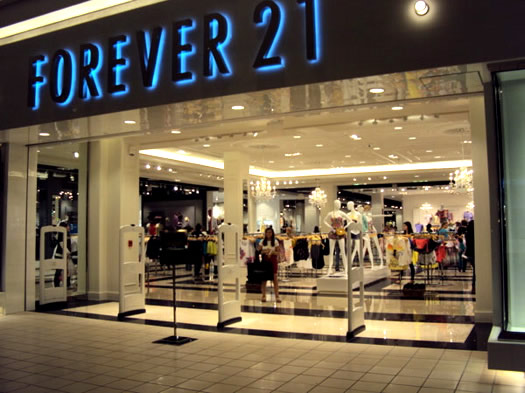
Forever 21, a store that caters to young people on a budget, is one of my daughter's favorite places to shop. And who can blame her? Great selection of fashion forward clothes and accessories at terrific prices.

But as with so many other businesses, especially those employing those same young people, the ObamaTax has bitten them on the tush, too:

"Popular clothing company Forever 21 is the first of what might be many companies to limit its non-management workers’ hours to 29.5 a week"

[ed: "first" ?! Au contraire!]

So what does this mean for those "non-management" employees? Well, the obvious affect is a smaller paycheck. But it's about to get smaller, since these innocent victims of the ObamaTax will now be forced to purchase health insurance, at an inflated cost, from the Exchanges.

Or pay a nominal fine penalty tax.

Gee, which do you suppose they'll choose?

If you like your current plan...So sad, Too bad

Much like Health Savings Account plans will be phased out under the ObamaTax, Garden State B&E (no, not that - "Basic and Essential") plans are on the chopping block:

"The bare-bones health insurance policy that’s been the plan of choice for New Jerseyans who can’t afford something better is set to go away next year ... B&E plans were meant to help young families get coverage and stanch the drop of enrollment in the individual health market, their relatively low price ... made them the most popular option for those who don’t get insurance through an employer or a government program."

Over 100,000 Garden State residents currently on these plans will now be shunted off to more expensive Exchange-based policies. While this may not seem like a big deal (NJ is home to almost 9 million souls), it's a big deal to folks who could barely afford even the minimal premiums ("as little as a couple hundred dollars a month for some people"), let alone removing even more choice from their health care financing menu.

And speaking of the ObamaTax, our friend Avik Roy has found an unpublished memo from the Congressional Research Service which notes that Ms Shecantbeserious and her minions have missed  about half of the scheduled deadlines mandated by the train-wreck. These include a "requirement for the Secretary to “develop requirements for health plans to report on their efforts to improve health outcomes” and "rules that would safeguard the privacy of medical records."

Must have given themselves a waiver.

How to control Passive Smokers?


Sometimes you come across interesting facts in publications. Economics Times Wealth August 18-24, 2013 has carried the following information

56% is the difference between the premium of a smoker and a non-smoker for a life insurance policy. The question before us is:
 
If Life Insurance Industry penalizes a person by 56% then what is the figure for Health Insurance? Why not penalize family members / colleagues who are passive smokers and are being compelled to smoke? May be this will result in reduction of smokers in our country.